

A unique approach to immigration in Canada
Canada is a country of immigrants, but unlike many other countries of such, it continues to leverage its success and economic growth on immigration as we speak!
In November 2022, the federal government announced an aggressive plan to take in 500,000 immigrants a year by 2025, with almost 1.5 million new immigrants coming to the country over the next three years.
This plan would lead Canada to welcome four times more permanent residents-per population- than its southern neighbor, the US. Last year, the country took in 405,000 permanent residents - the most in its entire history.
Why would Canada be so keen to gain immigrants?
The reasons are quite simple and logical. Like many western nations, Canada has an aging population with a lower birth rate. What that means is that if the country wants to grow, instead of shrinking, it will have to bring in immigrants. By 2032, immigration is anticipated to account for all of the country's population increase as well as almost all of the growth in the labour force.
Today, about one in four Canadians have come to the country as an immigrant, the highest among G7 nations. Compare that to the US, known commonly as the world's melting pot, where only 14% of the populous are immigrants. The percentage of immigrants in the UK is also around 14%. While Canada historically have had a very high support for immigration, the people in the US, UK, and EU demonstarted a contentious attitude toward it.

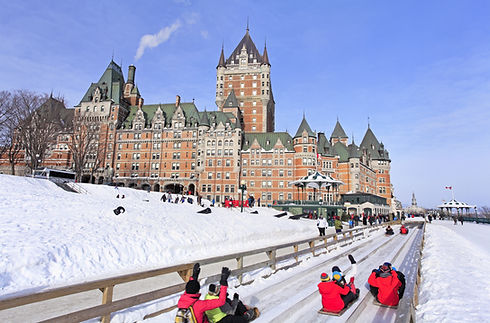
Different provinces in Canada also have different attitudes toward immigration. When the government announced its aggressive targets of up to 500,000 new immigrants a year, the province of Quebec, which gets to set its own immigration limits, said it would not take in more than 50,000 a year. That would mean that Quebec, which has 23% of the country's population, would only be taking in 10% of the country's immigrants.
Quebec Premier Francois Legault said he is concerned more immigrants would weaken the French language in the province. It is worth mentioning that an uncompromising focus on the French language and Quebecois culture is a huge issue in Quebec not solely related to immigrants. This complex issue have driven many Quebec-born Anglophones opting over years to move to other provinces, mainly Ontario.
While it's true that Canada has more potential for development, some regions have experienced more difficulties than others. Like many other big cities in the world, major Canadian cities like Toronto and Vancouver - where about 10% of the population currently lives - are facing the treacherous housing affordability crisis.

Economic immigration
Canada makes the focus on economic immigration, which is why nearly half of Canada's permanent residents are accepted on the basis of their abilities rather than a family reunion, is another way that Canada stands out from other western nations. This percentage is predicted to rise to 60% by 2025.
Canada changed from a quota-based system in the 1960s, when various nations were given different targets, to a points-based system in the 1970s, which gave preference to highly skilled immigrants who would be more readily able to contribute to Canada's economy. The system is still governed by the same kind of principles. Although Australia and New Zealand have similar systems in place, this is unique on a global scale.
What immigration programs does Canada offer for immigration?
-
Express Entry. Immigrate as a skilled worker.
-
Family sponsorship. Sponsor your relatives, including your spouse, partner, children, parents, grandparents, and others to immigrate.
-
Provincial nominees.
-
Quebec-selected skilled workers.
-
Atlantic Immigration Program.
-
Caregivers.
-
Start-up Visa.
-
Self-employed.
Moreover, the 2 most popular and relevant programs for people who are seeking a relocation are the Federal Skilled Worker Program and the Federal Start-up Visa which ill go over in this blog.
Federal Skilled Worker Program
The Federal Skilled Worker Program, which is the major immigration programme for skilled foreign workers, was designed and is continually modified by the Canadian government in order to achieve its goals for economic development. The candidates being awarded points based on the following factors:
-
Age - The optimal age of the immigrant is 20-29 years old. In general, Canada grants some points to candidates up until the age of 44.
-
High education - Canada is looking for people with a higher education, and the higher it is – the more points are awarded to the candidate.
-
Language proficiency - knowledge of English or French. The candidates need to take the IELTS exam.
-
Work history. Canada values work experience, but only if it was completed there. As a result, having work experience in one's native country by itself does not count as a point. However, the candidate is given points for their home country experience and proficiency in the official language(s). Similar to how points are given for combining foreign and Canadian expertise, candidates with this mix of experience might choose to apply for immigration under the Canadian Experience Class.
As a result, the ideal skilled worker is under 30 years old, holds a bachelor's degree, has English proficiency at the CLB 9 level, and has at least three years of experience in a skilled occupation. A higher score for one of the criteria can easily make up for a factor that didn't receive any points.
Federal Start-up Visa

The Start-Up Visa program, which is exclusive to Canada, was put in place to entice international businesspeople to settle there, produce new jobs, and boost the country's economy.
For more than ten years, new firms have played a significant role in the Canadian economy. They are regarded as crucial to the expansion of the Canadian economy as a whole, whether they remain small local businesses or expand into global corporations. Startup enterprises aid in transforming novel concepts and cutting-edge technologies into successful ventures, creating positions for fresh talent. Immigrant entrepreneurs with the potential to establish a company in Canada based on a novel concept or cutting-edge technology are eligible for the Start-up Visa program.
To be a member of the start-up business class, a foreign citizen must:
-
Be based on an innovative idea or technology.
-
Have obtained a written commitment for a total investment of at least $75,000 by one or more designated angel investor groups.
-
Have obtained a written commitment for a total investment of at least $200,000 by one or more designated venture capital funds.
-
Have Confirmed acceptance by a designated business incubator.
-
Have attained the specified level of language proficiency.
-
Have completed at least one year of high school in good standing.
-
Have the appropriate funds available.
